Enhance Your Medical Business with the Right Healthcare Software
By Amardeep Pundir

Healthcare stands right at the top of the list of industries that are benefiting from the developments in technology, and the impact of healthcare IT solutions on our lives was best witnessed during the pandemic. Since then, organizations in this domain have been constantly exploring ways to leverage healthcare software and IT services to improve patient care and streamline operations.

Why invest in healthcare software?
If you own a medical business, you must be familiar with all the effort and hassle that goes into keeping the operations smooth and efficient. With hospitals, operations, and medical processes becoming more complex with each passing day, successful maintenance of the costly assets and sensitive data. Given the fact that, the global healthcare in IT is expected to grow at a compound annual growth rate of 20% from 2019 to 2026, finding the right tools and applications that assist in ensuring patient satisfaction and efficient management of all entities has become non-negotiable if you wish to stay relevant in the industry.
But how do you identify the best healthcare software for your medical business? We have put together this comprehensive list of all the types of healthcare software for you to choose the most suitable one from.
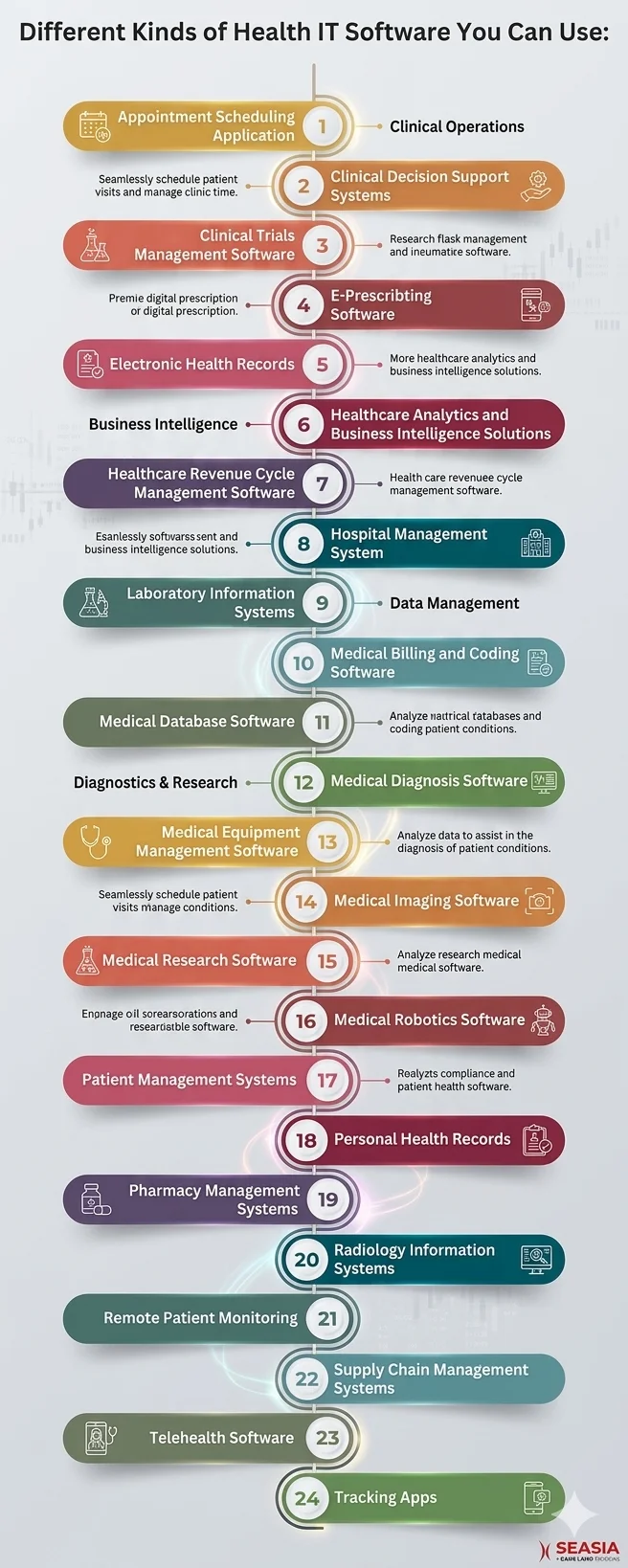
Appointment Scheduling Application
Appointment scheduling healthcare software streamlines booking, rescheduling, and managing patient appointments. It allows patients to easily schedule, reschedule, or cancel appointments online while providing healthcare providers with a centralized system to view and organize their schedules efficiently. This software often includes automated reminders and integration with EHR systems.
Clinical Decision Support Systems
These advanced healthcare software systems assist clinicians in making informed decisions using real-time data, algorithms, and medical knowledge bases. In addition to providing real-time support to healthcare providers, Clinical Decision Support Systems also offer much-needed guidance to clinicians during various diagnostic and treatment processes. The main purpose CDSS healthcare software serves is to provide accurate and timely information at the point of care.
Clinical Trials Management Software
Clinical Trials Management Software are healthcare apps that are most used by researchers for managing clinical trials more efficiently. In addition to streamlining the recruitment of patients and data collection, this software also offers vital features such as data security, protocol management, patient tracking, process automation, and more.
E-Prescribing Software
EHR is one of the most widely used healthcare software systems for storing and managing patient data, improving care coordination and reducing manual errors, enhances patient safety, and improves medication management. It typically integrates with EHR systems, providing seamless access to patient medication histories and supporting features like drug interaction checks and formulary management.
Electronic Health Records
Healthcare providers use Electronic Health Records to store and manage patient information. Patient information may include their medical history, diagnoses & treatments, test reports, and other relevant clinical data. EHRs help optimize patient care by reducing manual errors and enabling smoother coordination between different healthcare providers.
Healthcare Analytics and Business Intelligence Solutions
These healthcare software solutions convert raw data into actionable insights, helping organizations improve decision-making and operational efficiency. Data integration, predictive analytics, performance monitoring, improved patient care, operational efficiency, financial insights, regulatory compliance, and strategic planning are some of the noteworthy features of Healthcare Analytics and Business Intelligence Solutions.
Healthcare Revenue Cycle Management Software
RCM healthcare software streamlines billing, claims, and payment processes, reducing administrative workload and improving revenue flow. Some of the tasks that can be streamlined using healthcare RCM software include:
Patient registration
Medical billing
Claim submissions
Payment collections
RCM software is also an effective way of reducing administrative overhead and increasing efficiency without compromising on accuracy.
Hospital Management System
Hospital Management System, more commonly known as HMS, is a comprehensive software that caters to the needs of all the entities involved in hospital management, namely administration, patients, and healthcare professionals. The comprehensive list of features of a Hospital Management System includes:
Medicine and food management
Room booking and scheduling
Doctor's itineraries
Booked appointments
Utility expenditures
Laundry management
Power and water consumption
Supply inventory
Medical coverage
Updates about admittance
Medical procedures
Hospital appointments
Medication and prescription information
Laboratory Information Systems
The category of healthcare software used by clinical laboratories for efficient management and automation of their operations is known as Laboratory Information Systems. By providing a centralized platform for storing and managing sensitive patient data, Laboratory Information Systems have the following impact on the healthcare industry:
Improve laboratory efficiency
Reduce manual errors
Support clinical decision making
Manage complete laboratory cycle
Integrate with other healthcare IT solutions
Medical Billing and Coding Software
Medical Billing and Coding Software is used for efficient management of claim submissions and other payment-related aspects. They play a vital role in improving the revenue cycle for healthcare providers and reducing administrative overheads. Medical Billing and Coding Software simplifies the following:
Coding medical procedures
Insurance claim submissions
Payment tracking
Medical Database Software
Medical Database Software is used to store, manage, & retrieve patient information and medical records securely. It supports healthcare providers in maintaining comprehensive and accurate patient data, which typically includes:
Demographics
Medical history
Test results
Treatment plans
This software ensures data integrity, facilitates data sharing across departments, and complies with healthcare regulations.
Medical Diagnosis Software
Medical Diagnosis Software is typically categorized as patient-facing and physician-facing. While physicians use this software to collaborate on finding a diagnosis using artificial intelligence and other technological tools, patients can use it to get a diagnosis upon input of their symptoms and physical condition.
Medical Equipment Management Software
This software makes maintenance of medical equipment easier than ever by facilitating timetables for when the right time for routine maintenance is. You can also use correspondent alerts on Medical Equipment Management software to track inventory and free up hospital personnel. It is often included in larger healthcare software and hospital management software packages.
Medical Imaging Software
Medical Imaging Software processes all kinds of medical scans to suggest next steps and generate relevant 3D visualizations. Many healthcare organizations are also exploring how Medical Imaging Software can be used in the printing and designing of useful medical equipment like prosthetic limbs, implants, and more.
Medical Research Software
Medical Research Software aids researchers in managing and analyzing clinical trial data, biomedical research, and other health-related studies. It generally offers tools for
Data collection
Statistical analysis
Reporting
This software supports collaboration among researchers, ensuring compliance with regulatory requirements and improving the overall quality of research outcomes.
Medical Robotics Software
Medical Robotics Software is responsible for controlling the robotic systems which are typically used in surgeries or other medical procedures. Since this software can perform medical procedures with greater precision, its contribution towards generating better patient outcomes cannot be overstated. Other key features include real-time imaging and video feedback.
Patient Management Systems
Patient Management Solutions is the type of healthcare software that helps manage modules such as appointment scheduling, discharge processes, medical billing, and patient registration. Some of the key factors driving the growth of patient management systems market are as follows:
Growing demand for integrated healthcare solutions
Increasing adoption of cloud-based patient management systems
Need for better patient care management
Personal Health Records
As the name suggests, Personal Health Records are a digital way of recording critical patient information. This includes their medical history, ongoing medications, immunization records, lab test reports, and more. PHRs give patients improved control over their health information while also serving the following purposes:
Facilitate and improve communication between healthcare providers and patients
Tracking and managing patient's health conditions
Providing a complete overview of the patient's health history
Assisting patients with making informed decisions about their health
Pharmacy Management Systems
All kinds of pharmacy operations can be handled effectively by utilizing a Pharmacy Management System. By enabling pharmacies to manage their regular operations effortlessly, Pharmacy Management Systems are revolutionizing prescription filling, drug interaction checking, patient management, and drug inventory management.
Radiology Information Systems
Radiology information, such as images and patient data, needs to be managed effectively, and this is where Radiology Information Systems step in. RISs enable radiology departments to offer improved:
Image management
Patient scheduling tools
Report generation
In addition to that, Radiology Information Systems also help professionals keep complete track of the radiology cycle that typically includes: patient scheduling, exam tracking, image acquisition, and report generation.
Remote Patient Monitoring
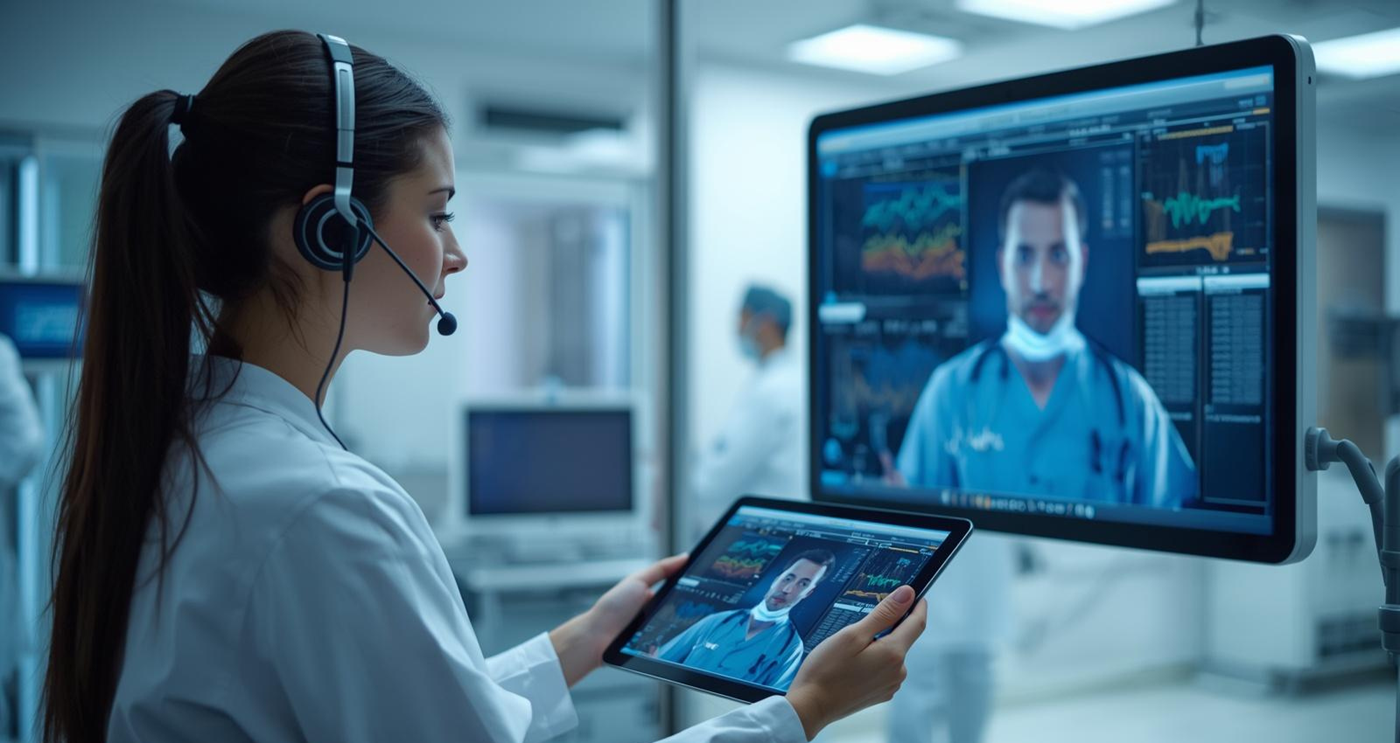
Remote Patient Monitoring systems enable healthcare providers to monitor patients' health conditions outside traditional clinical settings, such as at home. These systems use digital devices to collect medical data (e.g., blood pressure, glucose levels, heart rate) and transmit it to healthcare providers in real-time. RPM improves chronic disease management, reduces hospital readmissions, and enhances patient engagement and outcomes by enabling timely interventions.
Supply Chain Management Systems
Supply Chain Management healthcare software facilitates smooth management of procurement, storage, and distribution of medical supplies and equipment. Through automation of ordering and delivery tracking, these supply chain management systems help enhance the overall efficiency and cost-effectiveness of their operations.
Telehealth Software
Telehealth and telemedicine apps allow medical practitioners to provide healthcare services remotely. Some of the ways in which telehealth apps are leading the way for the role of healthcare software in revolutionizing the healthcare industry are:
Video conferencing
Appointment scheduling
E-prescribing
Remote monitoring
Secure messaging
Integration with EHR systems
Appointment reminders and notifications
Customizable health plans
Tracking Apps
Tracking apps are not exactly healthcare software but they make up an important component of healthcare management software by providing health-related data. These apps generally collect data related to general fitness and wellbeing, and diet, and are often paired with wearable technology like smart watches and fitness rings.
Choose Our Healthcare Software Development Services for Unparalleled Success with Your Medical Business
Seasia Infotech, a renowned software development company, has a long-standing history of delivering top-notch healthcare software to our clients over the years. From tailor-made hospital management software to a customized healthcare app for Dr. First, we have the right skill set and the expertise to provide you with software solutions that will certainly optimize your workflow like never before.
Are you looking for revolutionary healthcare IT services for your medical business? Leverage our expertise providing reliable IT services for healthcare and get started!